

Table of Contents
The Ideas We Kept Coming Back to
As we wrap up the year, we wanted to look back and ask: what really stuck? For us, it wasn’t a list of resources or trends, but a few simple ideas that kept coming up in conversations and shaping how we think about coaching and leadership. They’re not flashy, but they’ve had impact — and we hope they spark some reflection for you too.
Dave: Near enemy vs far enemy
You’ve probably heard the saying: “Your greatest strength can also be your biggest weakness.” The Buddhist concept of ‘near and far enemies’ sits in the same family. It’s a useful lens for any virtue, value, or strength we want to cultivate.
The far enemy is easy to spot – it’s the obvious opposite of the virtue. The near enemy is trickier. It looks similar to the desired quality but can actually undermine it.
Take a coach who values being empowering. The far enemy is clear: dictating and controlling. But the near enemy might show up as indecision, or prioritising harmony over performance. Both feel close to empowerment, yet neither delivers it.
Here’s another couple to highlight the idea:
Value/Strength | Near enemy | Far enemy |
|---|---|---|
Honesty | Bluntness - just telling it how it is regardless of context | Lying or deception |
Integrity | Being inflexible or judgmental | Saying one thing and doing another |
Drive/commitment | Taking on too much Trying to prove yourself, rather than focusing on what matters | Apathy Complacency |
The near enemy hides behind good intentions. It feels aligned with our values but quietly pulls us off course, weakening the very quality we want to strengthen. For me, this idea has been a great reminder: strengths aren’t just about doing more of something. They’re about doing it well, with awareness. Sometimes the biggest challenge isn’t the opposite of what we value – it’s the shadow that looks almost like it.

Profound office philosophy from Dwight….
Sam: Trust and care are built via small consistent actions
Dave has quoted LA Dodgers Manager Dave Roberts a few times this year, and one line has really stuck with me:
“Players only care about three things: does my coach care about me, can I trust them, and can they make me better.”
In Dave’s post Care as a Competitive Advantage, he makes a strong case that care isn’t a nice-to-have, it’s a necessity for sustainable high performance. That’s had me thinking about how care actually shows up in our coaching environments. Coaches will often ask how they can show players that they care, or how they can increase the level of trust players have in them.
My Instagram algorithm did me a solid the other week and surfaced a clip of Brené Brown speaking with Steven Bartlett on The Diary of a CEO podcast. She uses a “marble jar” analogy to explain how trust is built. Trust isn’t created in one big defining moment, where you suddenly go from no trust to full trust. Instead, it’s built through small, consistent actions that demonstrate care. Each action adds a marble to the jar. Over time, the jar fills and trust grows.
That idea reminded me of a story a player once shared about meeting Phil Jackson for the first time after being traded to the Chicago Bulls. He’d bounced around teams across the league and was used to very transactional introductions. When he met Jackson, the first question wasn’t about basketball. Jackson asked how his wife was handling the move. He knew relocation could be tough on families and wanted to check whether they needed any support. The player was shocked. No coach had ever asked about his family before. When he left the meeting, he realised they hadn’t talked about basketball at all, but he felt the care immediately.
Straight away, a marble in the jar.
In talent development, we often talk about the need to pair high challenge with high support. If we want players to reach their potential, they need to feel safe to take risks, stretch themselves, and make mistakes along the way. But that only happens when care and trust are in place. And trust isn’t built in speeches, slogans, or big sweeping gestures - it’s built through intentional, consistent actions that show you care.
It’s made me realise that every interaction is another opportunity to put a marble in the jar for your athletes.
Dave:
One phrase that’s really stuck with me this year is “the critical few”. I love it because it applies everywhere:
What are the critical few things to nail at home this weekend?
What are the critical few priorities at work this week?
What are the critical few points to emphasise in this workshop?
It’s not a new idea – I first came across it over a decade ago (and Sam also wrote about in one of our first editions)– but it’s resurfaced strongly for me this year. Why? Because I know I’m a better coach, colleague, father, and husband when I live by this principle. When I try to cover too much, say yes to everything, or cram too much into a session, I end up frustrated and less effective.
Focusing on the critical few brings clarity and impact. It forces us to choose what really matters and let go of the rest. That’s hard, but it’s worth it.
In coaching, it’s a powerful question:
What are the critical few attacking concepts to prioritise?
What are the critical few KPIs to measure and review?
What are the critical few standards we’ll live by?
When everything feels important, the critical few help us cut through the noise and deliver what counts.
Sam: Great Leaders know it’s not about them (but it’s only about them).
Every now and then you’ll read or hear something that articulates a concept that’s been swirling around in your head, but that you haven’t been able to properly capture or verbalise yourself. Then you hear it and go - ahhh! That’s it. That’s what I’ve been thinking.
I had that exact feeling while reading Gilbert Enoka’s book Become Unstoppable, with the first of what he calls his Seeds of Great Leadership:
Great leaders know it’s not about them (but it’s only about them).
It captures something great leaders seem able to do - hold two ideas at the same time that feel contradictory, but are both true.
On one hand, leadership isn’t about you. It’s about the people you serve and the environment you create. On the other hand, leadership is only about you because the only thing you truly control is yourself.
Charlie Munger captured this idea when he said:
“The way to have a happy partnership is to be a great partner. Learn to be a better partner and create a better environment for the relationship. Change yourself.”

Warren Buffett and Charlie Munger of Berkshire Hathaway - two people who knew how to have a happy partnership!
He reinforces a simple truth. When things aren’t going well, the first place to look is inward because that’s the only place we have real control. The question we must ask ourselves is: what can I do to make this relationship or situation better? Start there. Do the work on yourself first, rather than trying to change everyone else.
Marcus Aurelius was grappling with this 1800 years ago when he wrote, “Be tolerant with others and strict with yourself.” It’s a simple rule for leadership when things get hard: widen your tolerance for others, and narrow your focus to what you can control yourself.
So, thank you Gilbert Enoka for articulating all of that with a great one-liner that has really stuck with me. As a leader - It’s not about you, but it’s only about you!
As the year closes, reflection gives us a chance to pause before the pace of a new season begins. For us, it’s been about noticing the thoughts that linger and shape how we coach, lead, and live. Taking time to ask what’s stuck — and why — is a powerful habit. So as you head into 2026, carve out a moment to consider: what’s worth carrying forward? What will guide you when things get busy? We’d love to hear your answers.
Quote of the Week
You have power over your mind, not outside events; realise this, and you will find strength
An Even Deeper Dive
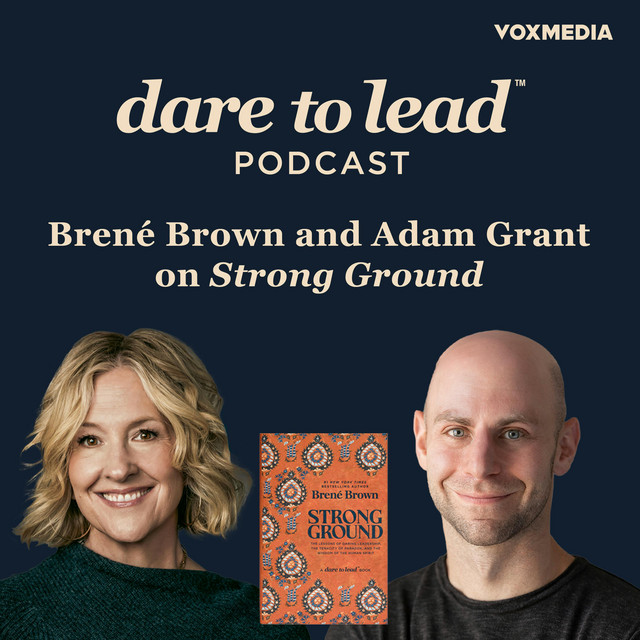
I (Dave) came across the concept of Near Enemy v Far Enemy from this podcast, with Brené Brown and Adam Grant. It’s episode two of a six part series, and I recommend the whole series:
This is a good read that goes into the idea of ‘subtraction’ as underrated idea in helping people solve problems. It’s another way to explore ‘the critical few’ idea:

And, if you missed Sam’s great piece from a few months ago, check it out here:
Want to discuss anything you’ve read? Email us at [email protected]. We’d love to hear from you!
Want to share the Deep Dive with friends? Just send them the link below to subscribe

