
Table of Contents
Blog
Attica is a fine-dining restaurant in Melbourne, Australia. In 2018 it was named the 20th best restaurant in the world. For six-straight years it was named as Australia’s best restaurant. I haven’t been (but am in Melbourne in a few months, I’m doing everything I can to convince my wife to go!) Part of the reason I want to go is because I think chefs and people running restaurants like Attica are high-performance personified. To quote Attica owner and Head Chef, Ben Shewry:
High level performers who visit Attica often comment on this - that the chefs are performing nightly for up to six hours at a stretch. Not many performers do five nights a week, for decades on end.

I was reading Ben Shewry’s book, “Uses for Obsession” recently, and one chapter in particular got me thinking. It’s the chapter about the culture and environment Ben is trying to build at Attica. First of all, he fully adheres to the idea ‘it’s not about me, but it’s only about me’ as the leader of that restaurant. The way he talks about building the culture of Attica, and how he recruits new people into that culture was what stood out to me though. Here’s an example:
After this clarification, I look them directly in the eyes and ask, “So if you are successful in getting this job, can you agree to this rule [around never bringing a negative attitude into the restaurant]” If the answer is yes, then I say, “Excellent, I will remember that we had this conversation, and please keep in mind that, at the first sign of a negative attitude, we will sit down and I will remind you of your obligation and promise to me, yourself and the team”
What he’s communicating with this question is ‘this is the standard here at Attica. We’ll help you, but we’re not going to accept anything less than that. You may have been able to do that at your previous restaurant, but not here’. He’s drawing a line in the sand, defining the standard and the identity required to work there.
Attica shows this principle in a human, cultural context. Baseball shows it in a technical, quantifiable one. Two very different domains, but the same truth underneath: clear standards shape behaviour. I have a passing interest in Baseball (Go Cubs - but because of this passing interest I had to google this to make sure I explained my idea properly). To make it to Major League Baseball (MLB), there is a structured set of ‘levels’ you need to progress through:
MLB: The highest level of professional baseball
Triple-A: The top minor league level
Double-A: A crucial development level where top prospects face advanced competition
Single-A: A league for younger prospects and newly drafted players
There’s more levels, but hopefully you get the idea. What I find interesting around this structure isn’t just the hierarchy, it’s the clear standards players need to hit to move up. To move from Double A to Triple A if you’re a batter, here are a few metrics you’d need to hit:
Hit .200 ISO (a power metric: slugging % - batting average)
Have an on-base percentage (how frequently a batter gets on base) of .340,
Be able to score runs consistently off pitches that are moving (rather than just fastballs).
It’s the same to move from triple A to MLB. You need to show evidence of being able to perform at the standard in order to get that opportunity (a caveat; I’m sure there are plenty of examples within the world of baseball that aren’t this linear, and as with all things human development, it’s never that black and white). Nevertheless, the principle that I think we can take from this, is the same as I described from Attica:
The standards aren’t going to drop for you. So how can you raise your game to meet the standards of where you want to go?
You’re not going to move up the levels in baseball just because you want to be an MLB player. You’re not going to land a job at Attica just because you like cooking and can julienne capsicum well. Two different contexts, but the same principle. I’d like to call it The Attica principle. As these two very different examples illustrate, the beauty of The Attica Principle is that it can apply to any skill.

Both Attica and baseball show us what the Attica principle looks like in action. James Clear helps explain why that works. Clear is author of the book Atomic Habits and quite possibly the person who has talked and written the most in history about habit building. In the book, he talks about how identity is one of the most powerful forces shaping people’s behaviour. As he puts it, “your current behaviours are simply a reflection of your current identity.” When you apply that lens to The Attica principle, something interesting happens: standards stop being just technical thresholds or behavioural expectations. They start becoming identity markers. It’s a shift. We’re now talking about something deeper. Meeting a standard isn’t just about skill or compliance. It’s about who you choose to be, day in and day out. When an athlete (or a staff member, or any performer) chooses to meet a standard, they’re casting a vote for the kind of person or professional they want to become.
This is also why the story from Attica resonated with me. It’s because Ben doesn’t leave it to chance that people live up to the standards he has spent so long setting. He doesn’t rely on ‘vibes’. He’s crystal clear and front foots it as soon as someone gets the chance to interview for a role there. On your first day, I have no doubt the environment is set up to help staff make repeated, small identity votes toward being someone who brings positivity under pressure.

Gif by rudinihadi on Giphy
In baseball, the promotion criteria make the high standards unmistakably visible: an ambitious player has to confront who they currently are and who they need to become to move up. If the Attica principle is going to work, people need clarity. Done well, the Attica principle answers three questions:
What does “good” look like here?
Not in abstract terms, but in observable behaviours, decisions, and actions.How will we know we’re meeting them?
This is where feedback, data, and shared language matter. When people know what will be noticed and what will be reinforced, confidence grows and uncertainty shrinks.What happens when we fall short?
Not in a punitive sense, but in a learning sense. High standards require high support. If the expectation is clear, then the conversation when someone deviates from that expectation becomes far easier and far more human: “Here’s what we said we do. Here’s what happened. Let’s work out how we close that gap.”
Communicating standards isn’t about delivering a speech at the start of the season or pinning a poster on the wall. It’s about making the invisible visible. The environments that do this well turn standards into something people can see, feel, and measure, rather than something they’re left to interpret on their own. This is the heart of The Attica Principle — clarity that reinforces identity.
Quote of the Week
“Ultimately, your habits matter because they help you become the type of person you wish to be. They are the channel through which you develop your deepest beliefs about yourself. Quite literally, you become your habits.”
James Clear
An Even Deeper Dive
We don’t usually do this, but the first link I’m going to reference here is another piece we’ve written about standards and culture. I read it again while I was writing this and I feel like the two are pretty good companion pieces. They’re talking about the roughly the same things, but coming from different perspectives:

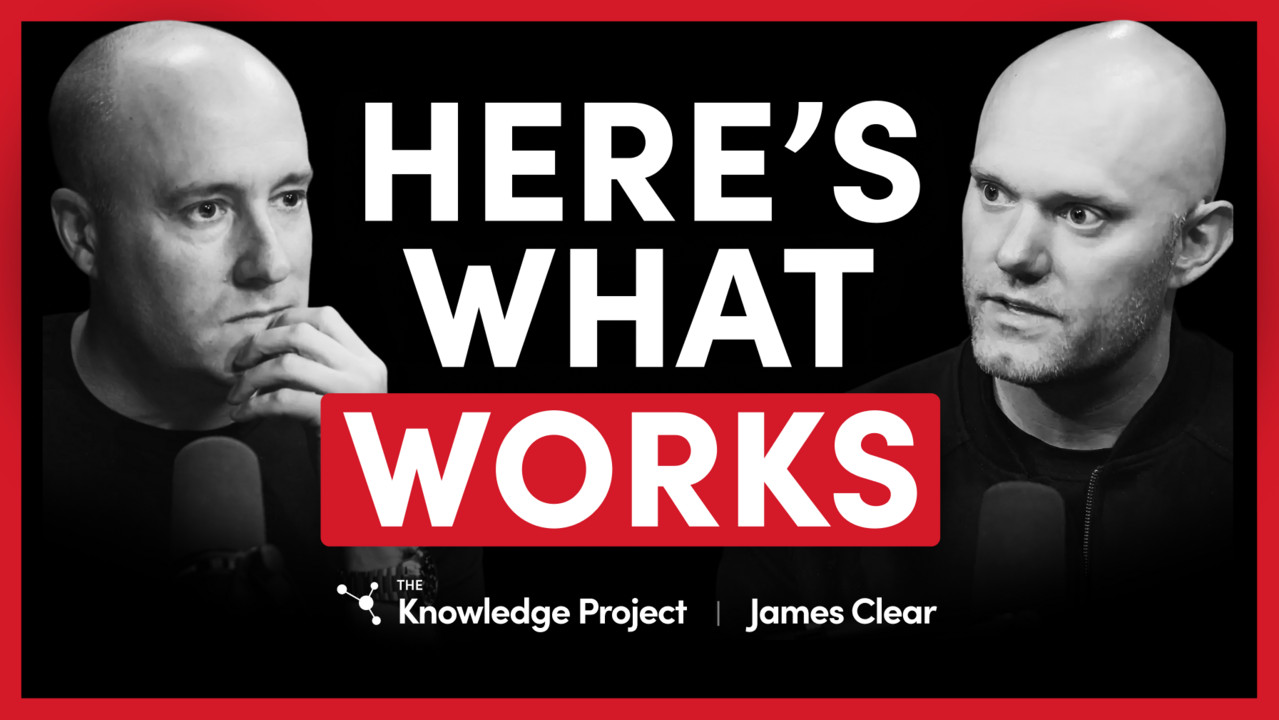
You get a double helping of dessert this edition, as I think this interview with James Clear is well worth a listen too:
Want to discuss anything you’ve read? Email us at [email protected]. We’d love to hear from you!
Want to share the Deep Dive with friends? Just send them the link below to subscribe

